

Rehearse Your Future
Content
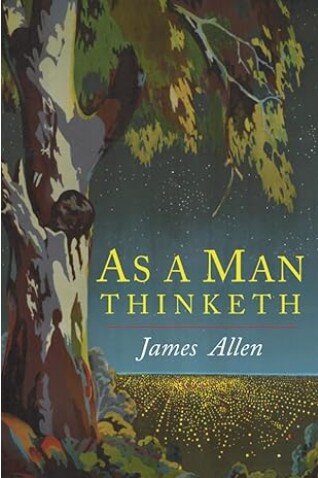
Creative imagination, or creative visualization, is an extremely effective tool for training the mind. The power of imagination is nothing new to us. In Western culture, the most influential author on this subject was James Allen. His best-known work, As a Man Thinketh (1903), inspired generations of positive self-help books, many using visualization techniques. Other notable pioneers in this area include Prentice Mulford, Graham Wallas, A. K. Mozumdar, Ernest Holmes, and William W. Atkinson, to mention but a few.
All that a man achieves and all that he fails to achieve is the direct result of his own thoughts.
– James Allen
In Buddhist practice, creative imagination is equivalent to the mental technique of bhavana, which means becoming. This technique uses imagination and visualization to bring something into existence—to develop or cultivate a trait through its contemplation. The word is often used in conjunction with another word to form a compound phrase. For example, panna-bhavana is the cultivation of wisdom.
According to the Yogapedia website, bhavana is “used to shape or influence the self to acquire positive characteristics or create positive change.” It is a form of meditation that uses visualization to bring something into existence—similar to the process of self-realization.
Read: Self-Realization
What you think, you become. What you feel, you attract. What you imagine, you create.
– Buddha
New Age Imagination
Many popular New Age notions derive from Prentice Mulford’s 1903 publication, Your Forces and How to Use Them. Following closely was W.W. Atkinson’s 1906 publication, Law of Attraction, which is similar in principle. Both are New Thought publications promoting the powers of creative imagination, drawing heavily on concepts expounded in Eastern religious texts.
Atkinson’s basic premise is that thought vibrations and certain energies are drawn together by some cosmic magnetism or mental positivity that can attract those things we imagine, primarily spiritual qualities.
Both publications contain useful information but require some critical assessment. Visualization is useful for rehearsing the mind and improving our behavior and experiences, but Atkinson’s (and others’) theories about attracting material things with cosmic magnetism are not entirely convincing.
Your thoughts do not create reality, but they do create your experience.
– Alan Cohen
To their credit, many of these authors take a spiritual perspective while emphasizing a freewill means to escape the mechanistic, materialistic, and secular thinking so prevalent in the early 20th century. But with a touch of irony, the techniques offered in these works were so effective at changing behavior that others soon applied them to advance their careers and pursue wealth.
One of the first authors to see the value of these techniques for such purposes was Napoleon Hill, Think and Grow Rich (1937). Other writers followed, such as Norman Peale, The Power of Positive Thinking (1952), David J. Schwartz, The Magic of Thinking Big (1959), and Joseph Murphy, The Power of Your Subconscious Mind (1963). One of the best-known inspirational speakers in the latter half of the 20th century was Tony Robbins, Awaken the Giant Within (1991).
Despite the materialistic overtones of these self-help gurus, it is heartening to discover the strong spiritual undercurrent sweeping through most of their publications. To achieve success, they all appeal to a helpful and limitless Power within. Tony Robbins is quite clear about this; he consistently attributes his amazing success to “our Creator” and “God-given power.” This power is the living Spirit within you.
God has bestowed upon man the faculty of creative imagination by which man may become conscious of anything he chooses …Whatever he recognizes and accepts becomes a reality to him.
– A. K. Mozumdar
Another influential book in this regard is Creative Visualization by Shakti Gawain, first published in 1978. Gawain’s premise is that the imagination has the power to create and attract (as in Atkinson’s Law of Attraction) for individual achievement and happiness. She claims that it is not necessary to believe in any metaphysical or spiritual ideas to use the technique. Nonetheless, she gives credit to her “inner guide,” even claiming that her guide is responsible for writing her book. And she also suggests this technique is most beneficial when used for a “higher purpose.”
In creative visualization, you use your imagination to create a clear image, idea, or feeling of something you wish to manifest.
– Shakti Gawain
Creative imagination is a powerful tool in our spiritual quest. Human genius and spiritual insights are rooted in the creativity of imagination. Scientific theories, eureka moments, philosophical explanations, and spiritual revelations all spring from vivid imaginations. Even the progressive evolution of civilization is predicated on creative imaginings stimulated by knowledge, wisdom, and ambition.
The technique of creative imagination can be used in any walk of life. Sports psychology has used positive visualization techniques for some time. Long ago, a Sumo wrestler by the name of Onami became one of the greatest wrestlers in the world by meditating—by imagining himself as a great wave sweeping everything before him, swallowing all in his path.
Since Onami’s time, sports coaches have used similar mental techniques to great effect, producing Olympic champions along the way. Imagining ourselves as winners is the first step to winning. Racers imagine the course, the turns, the speeds, and their physical performance. These techniques go so far as to imagine what they will hear, feel, and even smell. In essence, these athletes are constructing a virtual reality in which they live the experience before actually doing it.
Creative imagination and visualization are effective, positive techniques that can be applied across all avenues of life. By imagining yourself doing something you would not usually dare to do, you prepare yourself for future adventures.
Positive Imagination
Like all tools at our disposal, creative imagination can be either a negative force or a positive force in our lives. If we insist on harboring negative views about the world around us, or about our lives, capabilities, and fortunes, we will forever express negative views and live a negative life. If we imagine that we cannot do something, then we will not be able to do it. If we imagine failing, we will fail.
By considering a thing as impossible, you immediately draw to yourself all the elements that contribute to failure.
– W.W. Atkinson
But it is just as easy to imagine yourself succeeding. Realize that God, along with the entire spiritual universe, is positive. Positivity is a spiritual reality, whereas negativity thrives only in the errant human mind, manifesting through our misguided and malicious intents. Negativity is a consequence of not following, or not living, the Spirit Way.
It is always good to recognize thoughts and emotions that hamper our spiritual growth, but it is also important not to dwell on them. We begin a positive approach by imagining and contemplating the love and goodness of God, and by having unwavering faith in this love and goodness.
Read: What Is Spiritual Faith?
By venerating divine values and spiritual meanings, we push aside our negative thoughts; we crowd them out. Rather than actively fighting negative forces, we let the Spirit consume them with love.
Much, very much, of our spiritual progress is a matter of harmonizing our thoughts and behavior with spiritual thoughts and behavior. And our creative imagination is an effective tool for doing just that. It helps us to realign our thinking, making it more compatible with the truth of spiritual realities.
The positive power of creative imagination is not an illusion; it is not a self-deceptive optimism. For all of us, the experience of reality and consciousness exists only in the mind. Therefore, imagination is an extremely effective psychological technique for raising our thoughts and experiences above the mundane level of existence, even to the heights of a spiritual state of mind.
The dramas that are enacted within, make you what you are without.
– A. K. Mozumdar
Take time during the day to imagine the highest spiritual ideals. Imagine living the perfect life in a perfect state of mind. Imagine living every moment as the Spirit wants you to live. Imagine contacting the very source of all divinity. Imagine yourself in a humble and receptive state of mind, one that trusts completely in the unconditional love, infinite wisdom, and divine goodness of God. Imagine yourself in the presence of God.