

Meditate in the Presence of God
Contents
Meditation is often associated with Eastern religious practices or clinical science techniques. But neither practice necessarily includes God or even spirituality. Divine meditation, on the other hand, restores God to the equation; it adds the essential presence of a divine Being into traditional meditation techniques.
See also Meditation – Its Mystic Roots
Divine meditation is a spiritual exercise that involves contemplating and revering spiritual ideals, such as reflecting on the divine nature and attributes of God, assimilating divine values, giving thanks for the gifts of God, and praying for the spiritual uplift of humanity.
The real strength of divine meditation lies in its recognition of a Creator God as the primal source of all reality, a Supreme Source that can be contacted in the upper reaches of consciousness through sincere worship, thoughtful prayer, and insightful contemplation.
Divine meditation is a progressive technique for contacting the Spirit Within and fostering your personal spiritual transformation. It is a practice that exchanges the mind of self for the mind of God. It is the intimate experience of sharing your inner life with the Spirit of God, all the while maintaining complete faith in the goodness of this eternal and divine Presence.
Meditation makes the contact of mind with spirit; relaxation determines the capacity for spiritual receptivity.
– The Urantia Book
Divine meditation is a spiritual attitude of mind—your spiritual framework of divine values and supernal goals. It is a mental exercise in which you imagine yourself thriving in a spiritual surrounding—a friendly, sympathetic, and supportive environment in which you can freely open your heart and soul to a friendly Spirit, a wise and loving friend. It is imagining yourself in the presence of God to discuss your problems and ask for advice.
Divine meditation serves as a reverent milieu for prayer and thanksgiving, both of which are psychological and spiritual techniques for changing our outlooks on life—our attitudes toward ourselves and the world. We begin to see ourselves in a broad, universal context, a spiritual and cosmic setting in which we actively participate and help others.
Divine meditation is reflective worship emphasizing creative imagination, deep thinking, and spiritualized thought. It is the wholehearted and unreserved worship of the beauty of God, the goodness of God, the truth of God, and the love of God—the adoration and veneration of the inconceivable power, infinity, and eternity of the Divine Source of all reality.
See Intelligent Worship — How It Works
Beyond East and West
The Western trend in Zen Buddhism leans toward a clinical approach to mindfulness, which is, for the most part, a secular psychological approach. This trend is a predictable transition for Zen because, although its contemporary followers search for the final beatitude—a blissful mental state called nirvana—they openly admit it is a godless state of mind.
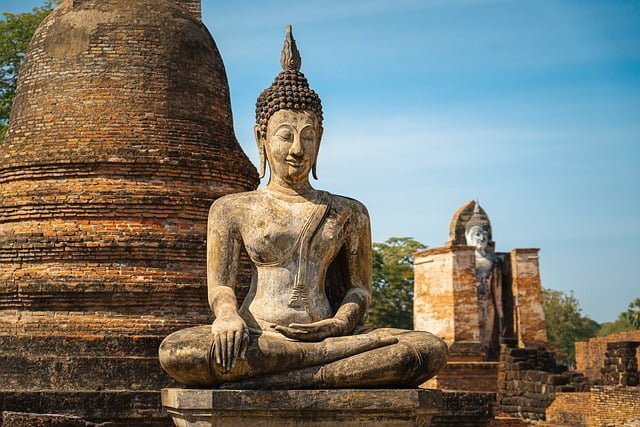
But whether Buddhists consciously recognize the presence of God or not, Zen meditation techniques are effective and productive because they help us perceive the self-contained, changeless nature of God. They are a viable approach to God because there truly is a universal, spiritual energy we can draw on, as most Buddhists presume. Indeed, meditating on the Tao (God) as the primal, eternal, and vital Source of all reality is a potent way to grasp the Deity Absolute—the deep reservoir of all reality.
Read Way Beyond Magic
But one significant difference in the God experience is the belief that this universal and infinite supply of energy potential is entirely the creation of a Universal Creator—a creation that is manipulated by the absolute will of a personal and purposeful God, the Controller, the Creator, and the Upholder of all reality.
Another key departure from the Eastern approach is our belief that God manifests as a freewill personal spiritual being with whom we can communicate and interact (commune). Personality is just one manifestation of God, but it is an important one. Without personality expression, it’s difficult to conceive of divine love or a friendly universe, simply because cosmic energy and matter are devoid of personality and, therefore, cannot love or be friendly.
Read God Is Someone
Mind Is the Gateway
By means of reflective, devout, and imaginative thought, the mind becomes our gateway to the spirit, not a hindrance to it. All contemplation, meditation, prayer, and worship require our reverent thought, not the absence of it. But the words we use in spiritual thinking are not as important as our frames of mind and attitudes of soul. There are no correct words in these situations, although our choice of words (in thought and speech) can influence and direct our perceptions of spiritual realities.
Spiritual sentiments, along with focused attention, direct our thoughts to the higher reaches of the mind, a level of consciousness that connects the material world with the spirit domain. In this thoughtful state, we direct our minds to contemplate divine values, to discover more transcendent realms of spiritualized thought, and to become conscious of the spiritual currents of celestial communication.
It is your thoughts, not your feelings, that lead you Godward.
– The Urantia Book
Divine meditation is a dynamic and positive spiritual approach. It’s a technique used to control and direct thoughts, as well as to reflect and relax. Instead of simply becoming aware of something or trying to exclude all thought, we relax to contemplate all things spiritual while consciously allowing the Divine Spirit to adjust our thoughts—to bring them into harmony with the spirit phase of existence—to spiritualize them.
This is not a difficult task. We soon discover that divine meditation is an effortless, yet powerful, psychological strategy for contacting spirit and, in the process, we gain peace of mind, soul growth, and spiritual insight—wisdom.
During meditation, we cannot entirely escape the ego, yet we avoid being egotistical or entertaining any notion of self-importance. We choose to be selfless by not thinking too much about ourselves. The goal is to fully identify the self with the Divine Presence so that the two become as ONE. In effect, we are allowing the Spirit to express itself through our personalities, our thoughts, and our actions.
The end of life is to be like God, and the soul following God will be like him.
– Socrates
The Spirit does not seek to control our thinking but rather to internalize spiritual values. It cannot influence our thoughts against our will, but with our permission, it can improve and modify our thinking processes so that we actually think, speak, and live on behalf of God.
If toxic thoughts or evil inclinations arise, our intention is not to confront or combat them. This only gives an open stage to things not of the spirit. Rather than resisting unpleasant thoughts and unwittingly giving them a life of their own, it’s better to change our thinking by focusing only on what is loving, good, true, and beautiful. Ignore the rest.
In divine meditation, we control our thoughts by contemplating only divine ideals and spiritual ideas that we admire, respect, and venerate. We can then focus and channel these exalted ideals constructively by considering the many ways to express them in our spiritual lives.
Reflective worship is not only a matter of outwardly expressing our love and adoration for an all-wise Source, but it also opens our minds and souls to receive God’s wisdom. We are not trying to empty our minds; instead, we are permitting the spirit to fill our minds with spiritual thoughts and spiritual goals—to be spiritually mind-full.
Keep Balanced
Divine meditation is a sane and balanced effort to reach beyond the borders of self-consciousness. We accomplish this by extending our awareness into the semi-spiritual realms of soul consciousness. If we can reach this level of perception, we are better prepared to make a concerted foray into spirit consciousness—direct contact with the divine Presence within us.
Ideally, our thoughts and feelings should flow freely in spiritually liberated but controlled channels of creative imagination. This means that we not only monitor our thoughts, ensuring they are pure in intent, but that we also imagine divine ideals.
Read: Creative Imagination as a Spiritual Technique
Before we begin with this powerful and effective approach, there are a few caveats to keep in mind. We are not trying to induce a trance-like state or some imagined state of bliss. We also wish to avoid fanatical notions, entertaining visions, or interpreting dreams. These are open to endless speculation and distract us from the sober but thrilling realities of our God experience.
We should also avoid prolonged social isolation. Keep on track, but keep balanced by sharing your thoughts and experiences with others of similar mind—kindred spirits. Sharing your spiritual journey helps you to put things in perspective and contributes to a sense of balance between your inner and outer lives.
Set the Stage
Ideally, we can meditate, pray, or worship anywhere at any time. But to get the most from our exercises, it helps to remove ourselves from the rush of life and the worries of the day. Choose quiet surroundings where there is little chance of being disturbed.
There are hundreds of books and websites offering instructions on how to meditate. These are not elaborated on here, but it is helpful to review some of them and adopt the techniques that best suit you. Just keep in mind we are taking a God-centered approach rather than trying to empty our thoughts.
Eastern meditation practices are particularly useful for relaxing the body and mind, and for focusing on a specific objective. The real difference in the God experience is that you are focusing on the divine Source of all things and filling your mind with spiritual realities, divine values, cosmic awareness, and God consciousness. This is the divine meditation method.
Surroundings

It is always good to appreciate the value of beauty in meditation and contemplation. Beauty arouses our highest spiritual emotions. We can then employ these inspirations in our intelligent and reasonable efforts to commune with God.
We find beauty in the flora of nature, whether an emerald forest, a public park, or your backyard garden. Even in stark environments, there is a unique and simple beauty—the saguaro cacti of an American desert, the tropical mangroves of Costa Rica, or the Arctic tundra of the Canadian North. A time of sunset or sunrise is conducive to divine meditation, as is gazing on the panorama of the starry realms. There are many rewarding ways to enjoy nature’s beauty.
If your meditation and worship must be confined to a building or a room, create a place of warm, simple beauty, adorned with modest, tasteful works of art inspired by nature. Design your setting to inspire happiness, reverence, and holiness.
Relaxation
One of the classic Buddhist meditation techniques is to focus on the breath. This is the simple practice of consciously taking control of our breathing, keeping it slow, deep, and even. This is a good way to begin, as it takes our minds off worries and anxieties.
Also consider progressive muscle relaxation, also known as a “body scan.” It’s an extremely beneficial technique proven effective by several research studies. It may take a little practice at first, but after a while, it will come naturally.
Progressive muscle relaxation takes advantage of the fact that the body affects the mind, and the mind affects the body. By relaxing the body, you relax the mind. We are often unaware of how much we tense our muscles in reaction to stress or anxiety.
We begin these exercises by consciously tensing our muscles or muscle groups and holding the tension for a brief period (5 to 10 seconds). By continually tensing and relaxing, we become acutely aware of the difference between the two states, realizing we are in control of our muscle tension and, by extension, our thoughts.
We could begin with our toes by briefly tensing every muscle before completely relaxing. Now do the same thing with different muscle groups, tensing and releasing as we move from the toes to the top of the head. After doing this a few times, we become more acutely aware of our body tensions, relaxing in the process. This is a proven method for taking control of body and mind.
But once we take control of our breathing and muscle tension, there is little need to spend more time on this. By now, we should have reached a state of physical and mental relaxation, ready to begin the emotional, intellectual, and spiritual journey that brings us a little closer to the Spirit Within.
Focus On Divinity
Now is the time to focus our attention on spiritual qualities and let the Spirit carry us away. Instruct your mind to dwell only on thoughts that are divine in origin. Focus on one spiritual concept at a time, such as God’s love or God’s goodness.
As you look around in your mind, become aware of your opinions, settled ideas, and prejudices. These thoughts impede all efforts of the Spirit, preventing it from sharing with you the loving and inspiring messages beaming out from the divine Source of all things.
Whenever you identify inhibiting thoughts, don’t dwell on them—just clear them out of the way with divine values and a consciousness of God. Remain open-minded. Give up your cherished ideas about the way the world should be. By all means, change the world if you can, but for now, just accept it for what it is.
During divine meditation, you may encounter startling thoughts or experience intense emotions. Take care to scrutinize these. Recognize every thought and experience for what it is, and not for what you imagine or wish it to be. Balance your thoughts and emotions with sincere self-critique while having the courage to accept new spiritual realities.
48 Meditation Exercises
There are no rules or set procedures for divine meditation, except for the obvious fact that you are attempting to contemplate all things of a divine or spiritual nature for the purpose of attaining spiritual awareness, spiritual insight, and divine wisdom. It is a method of subjecting yourself to the consciousness of contact with Divinity.
The whole point of divine meditation is to change yourself—to progress in all aspects of God consciousness, spiritual enhancement, cosmic knowledge, and experiential wisdom—to become a better person, not just for yourself but for everyone else, for the benefit of your family, your community, all humanity, and for the entire universe.
Begin by using your creative imagination. Reach up to a high state of consciousness by being aware that you are aware. Have faith that the Spirit is trying to impart love and wisdom to you, and trust that contact is easier when you are purely motivated and sincere of heart. Be humble and open-minded as you stand at the doorway to the spirit world, and then summon the courage to knock.
Knock and the door will be opened to you.
– Jesus of Nazareth
In all these exercises, take your time. Meditate on just one topic or one line of thought each day. Rushing through spiritual concepts seldom yields positive or lasting results. It takes time to fully realize and embed new truths.
Meditating on a thought doesn’t mean saying it over and over in a mindless fashion. Instead, it is reflecting on a concept from different perspectives, especially moral and spiritual perspectives. It means contemplating, or probing, a subject of interest with an eye to divine values and spiritual meanings. And it means using your imagination to evoke the presence of God in order to recreate yourself as a new being—as a truthful, good, and gracious being.
Take about an hour each day to contemplate various aspects of divinity and, after six days, use the seventh day to actively help others. Your degree of contact with spirit depends not just on your meditation and worship exercises but also on how much you share your love and compassion in everyday life.
The weekly exercises below are only suggestions. Be open and receptive. The best responses are spiritually spontaneous, individual, and unique. But until you reach that point, you may need a more structured approach.
Week One: Contemplate the Attributes of God
Personal attributes include things like height and weight, skills and abilities, and specific jobs people do. When it comes to God’s attributes, we think of his infinity, eternity, and power.
We begin by contemplating these and other attributes of God. Spend one day thinking about just one aspect. And, by all means, add more as your spiritual inspiration and insights guide you.
Day One—Imagine God as the Primal Source of all reality. Without God, there would be no reality. Imagine a self-existent Divine Creator who always existed before anything else was created. Imagine One God who is all there is, the infinite and eternal I AM.
Day Two—Imagine God being everywhere, living in all space, encompassing all space, yet beyond all space and the creator of all space. Envision God literally and eternally present in the universe of universes. Stretch your mind beyond space to embrace the infinity of the First Source and Center.
Day Three—Imagine the eternity of God, the one who is beyond all time, yet encompasses all time, lives in all time, and is the creator of all time. To God, there is no past, present, or future—all time is present at any given moment. The eternal God is never-beginning and never-ending. Go beyond time by accepting the eternity of Spirit.
Day Four—Imagine the infinite, eternal, and absolute power of a majestic God, the supreme preserver, the controller, and the upholder of all universes and all reality—a Power that maintains the entire universe with unlimited force and complete sovereignty.
Day Five—Imagine God as the ultimate and absolute spirit, an all-wise, all-present, and all-powerful Deity of Creation, a divine controller, a brilliant light at the Paradise center of all reality, bonding and uniting the entire universe wisely and effortlessly.
Day Six—Imagine God as the First Life and the gift of life, the source of all life, the pattern of all life, and the purpose of all life. Visualize the unlimited Spirit of All Creation as the divine source of all mind, all consciousness, and all personality.
Day Seven—Do something good for someone.
Week Two: Contemplate the Nature of God
A person’s nature is often perceived as their character or qualities—such as whether they are kind or cruel, respectful or rude, selfless or selfish. Take a week to contemplate the divine nature of God.
Day One—Imagine God as the spiritual epitome of love, the divine source of all love—a selfless, self-forgetting, compassionate, and wise love. Freely accept this perfect, infinite, and eternal love that is freely given to all who wish to receive it. Be Godlike—love others with parental love.
Day Two—Imagine God as the ultimate good and the source of all goodness—the eternal, divine goodness of a replete and perfect existence. Accept this eternal goodness into your heart and your life. Be Godlike—be good.
Day Three—Imagine God as infinite and eternal beauty and the source of all beauty. Discern the beauty of the universe, the beauty of goodness and truth, the beauty of grace, the beauty of symmetry, and the beauty of harmony in a spiritual life. Be Godlike—be beautiful.
Day Four—Imagine God as divine truth and the source of all truth—a living, eternal truth. Accept the Spirit of Truth into your heart, and let it live in your thoughts and actions. Allow truth to grow and flourish in your soul. Be Godlike—be truthful.
Day Five—Imagine God as supremely compassionate, fair, and helpful—the natural and divine expression of goodness and love. Accept that God is forever patient, understanding, forgiving, and always considerate of our challenges and tribulations. Be Godlike—understand and forgive.
Day Six—Imagine God as the source of all divine wisdom—an infinite, eternal wisdom—a perfection of truth and knowledge. Envision supreme wisdom, a wisdom conditioned by God’s love, goodness, and compassion. Be Godlike—be wise.
Day Seven—Help someone who wants and needs your help.
Week Three: Contemplate Cosmic Meanings
Day One—Imagine love as the divine glue that forever binds the universe. Envision God’s love as the greatest of all spirit realities, the only true, infinite, and eternal power throughout the entire universe. Imagine the power of love pervading your entire being and the entire cosmos.
Day Two—Imagine yourself becoming like the true nature of God and thereby becoming Godlike in all that you say and do. Imagine yourself achieving spiritual maturity, enhanced insight, and the highest ideals. Visualize yourself as a spirit child of God and a citizen of the cosmos.
Day Three—Imagine all things material, intellectual, and spiritual working in complete harmony in the great scheme of universe progression. Visualize divine beauty, intellectual truth, and spiritual goodness as integrated and unified realities throughout the cosmos.
Day Four—Imagine the gift of eternal life. Picture the endless exploration of the wonders of an almost infinite universe. Imagine astonishing and thrilling adventures throughout the countless worlds of space. It is yours for the taking—follow your Spirit Guide and become an active member in a friendly universe.
Day Five—Imagine the unique and personal contributions you can make to the positive and eternal progress of the universe and all its beings. Contemplate your spiritual privileges and duties as a child of a loving Universal Father.
Day Six—Imagine you belong in a friendly, helpful, and loving universe. Imagine yourself as a real cosmic citizen, completely loyal to the will of Divinity, completely loved and cherished by a universe Mother Spirit and all her angels.
Day Seven—Fulfill your duties to family and friends.
Week Four: Contemplate the Presence of God
Day One—Imagine the loving Spirit of God living within you, seeing what you see, hearing what you hear, listening to your thoughts, aware of your motivations and desires, waiting patiently for your love and devotion.
Day Two—Imagine a friendly God living beside you. Visualize the Spirit of Truth walking with you throughout all your daily adventures. Ask this spirit to show you the truth in all situations and then listen (feel) for a spiritual response. Live a truthful life.
Day Three—Imagine the Holy Spirit all around you. Visualize your guardian angels, who are always with you, helping you see things in a spiritual light and make spiritual decisions. Feel these loving angels with you now and love them in return.
Day Four—Imagine God’s spirit living in all people. Acknowledge and respect the Divine Presence within everyone. When you speak to others, speak to their Spirit as well. Honor the light in all people by valuing them as you value yourself. Respect others, understand others, love others.
Day Five—Imagine God is helping you to become a spiritual being. Believe he wants you to succeed and is actually helping you right now. Picture yourself becoming more spiritual at this very moment. Believe and accept this truth. Feel your spiritual transformation.
Day Six—Consciously share your inner life with God. Share your hopes and aspirations, your fears and anxieties, your happiness and devotions, your love and adoration. Be sincere and open. Listen for, and feel, the divine response.
Day Seven—Share your goodness, truth, and beauty with all others as you live in the presence of God.
Week Five: The Benefit of Prayer
Prayer is most effective when it is sincere and spontaneous. Our individual needs vary so much that it is impossible and impractical to come up with prayers that suit everyone. But here are some examples you may find helpful.
Day One—Pray for all to have the strength and courage to be loyal to the divine will. Pray for the courage to face anyone and anything, knowing there is no fear in love. Pray for everyone to have the resolve and fortitude needed to face the challenges of life.
Day Two—Pray for honesty of mind. Pray to be genuine and trustworthy to yourself and others. Pray to be forever loyal in your duties and responsibilities, and pray for the ability to speak with sincerity and candor.
Day Three—Pray that we all learn tolerance and forgiveness, patience and understanding, tactfulness and resilience. Pray for compassion, love, kindness, fairness, and benevolence.
Day Four—Pray for personal wisdom, divine wisdom, and cosmic wisdom. Pray for all people to be wise in their actions and speech. Pray for truth, knowledge, and understanding.
Day Five—Pray for faith to sustain you and all others in the spiritual journey. Have faith in each other. Pray to remove all doubt and replace it with undying faith and loyalty in the wisdom, goodness, and love of God.
Day Six—Pray for the desire to love and help others. Pray for those who love you as well as those who despise you. Pray for the welfare of others and for solutions to problems. Pray to be selfless.
Day Seven—Work for the spiritual advancement of others.
Week Six: The Value of Gratitude
Day One—Give thanks for all the good things in your life. Give thanks for all the good things in the world. Realize that, over the long term, the world is getting better and give thanks.
Day Two—Give thanks to all those who have helped you through life. Give thanks to your family and friends. Give thanks to all those good people who work for peace and harmony, beauty and nature, goodness and truth.
Day Three—Give thanks to your guardian angels who are so near to you and who watch over you. Thank them for their diligent and persistent work toward your spiritual growth and eternal life.
Day Four—Give thanks to the Spirit of Truth who walks beside you, always helping you to discern the truth and to act on it wherever and whenever it presents itself. Listen to the Spirit’s comforting voice saying, “This is the way,” and give thanks.
Day Five—Give thanks to the Spirit of God living within you. Be thankful for this precious gift that is the secret of your spiritual success and eternal life. Accept and believe this Spirit is always working to spiritualize your mind, and give thanks.
Day Six—Give thanks to the infinite, eternal God, the center and source of all reality. Give thanks to the all-wise, all-knowing, all-powerful, and all-loving Creator of the Universe. Know that God is good, perfect, holy, and glorious, and give thanks.
Day Seven—Go out into the world to give thanks.
Week Seven: The Power of Worship
Like prayer, worship is a highly unique and individual experience. Some like to worship with music, while others prefer the quiet solitude of beautiful surroundings. Worship is best when it is spontaneous and sincere, but when starting out, it may not feel so. Be patient. The words you use are not as important as your frame of mind (see Worship Is Divinely Creative).
Day One—Worship and venerate the First Source of all reality, the Divine Cause of all causes. Glorify the Eternal One who resides at the center of all reality, who pervades all reality, who is all reality. Feel and adore the divine presence of God.
Day Two—Worship the gracious, almighty, and all-pervading power of God. There is no true power in the entire universe except for the absolute power of God. Feel and revere this infinite and universal power working for the good of the entire universe.
Day Three—Worship the majesty, glory, and infinity of a Creator God. Adore the eternal greatness and perfection of his almighty presence. Feel and revere this superior, matchless, and boundless being who lives within you and is all around you.
Day Four—Worship and revere the Infinite Source of all life, all consciousness, all mind, and all experience. Feel and revere the spirit of life within you and around you. Worship the beautiful Source of a beautiful life.
Day Five—Worship and admire the goodness of a benevolent and compassionate God. Feel and worship the presence of this divine goodness. Have faith that, no matter what hardships you face in life, God has a good, loving, and divine plan for you.
Day Six—Worship and adore the unconditional, divine love of God. Feel the Creator’s true affection for you and love him in return. Love God with all your heart, with all your soul, with all your mind, and with all your strength. Feel and revere this heavenly love.
Day Seven—Learn to understand and love one more person today.
Week Eight: Transform Yourself
Day One—Open your mind to the spiritual power and divine energy emanating from the Spirit within you. Allow your Spirit to recharge and refresh your body, mind, and soul with spiritual energy. Ride this wave of divine energy, breaking through all resistance.
Day Two—Harmonize your physical, mental, and spiritual powers with the Divine Presence. Let them all work together as one force wholly dedicated to doing God’s will. Balance yourself in all things, giving equal weight to spiritual growth in body, mind, and soul.
Day Three—With joy and eagerness, fully cooperate with your Spirit Teacher. Imagine yourself coordinating and consecrating all your thoughts, words, and deeds with the Holy Presence. Imagine yourself making courageous decisions to do and to be whatever it takes.
Day Four—Imagine yourself embracing a spirit-led life by consciously choosing the divine realities of truth, beauty, and goodness. Visualize yourself living out these values through expressions of love, compassion, and ministry to others.
Day Five—Envision yourself as a child of God and happily accept that you truly belong in a greater universe guided by love and compassion. Joyfully accept your cosmic citizenship and recognize your spiritual obligation to the continuing, progressive evolution of the universe.
Day Six—Allow the Divine Spirit to show you the real motive, the final aim, and the eternal purpose of your life’s struggle. Allow the Spirit to fight with you and for you. Allow the Spirit of Truth to recreate you as a spiritual being.
Day Seven—Give thanks to all the spiritual forces within you and around you. Receive their loving guidance and pass it on to others.
Meditative Reflections
I hope these exercises have helped you feel a little closer to divinity and inspired you to become more God-conscious. By now, you have probably developed a technique that works best for you. This is great, but don’t get stuck on just one method or one way of thinking. Be spontaneous in spirit and always probe within yourself for greater truths, enhanced values, and spiritual meanings.
Throughout these divine meditations, keep in mind that real progress entails outwardly expressing your spiritual transformation through love and compassion for your fellow beings. You can sincerely evaluate your personal success by the degree to which you manifest a spiritual nature, one marked by loving service, unselfish devotion, enlightened honesty, unfailing goodness, forgiving tolerance, and enduring peace.
Divine meditation not only brings you closer to God but is also useful for solving life’s problems, a topic explored in Divine Problem Solving.
Let experience teach you the value of meditation and the power of intelligent reflection.
– The Urantia Book